
Archived
Meet the Brave, Audacious, Astonishing Women Who Built the Standing Rock Movement
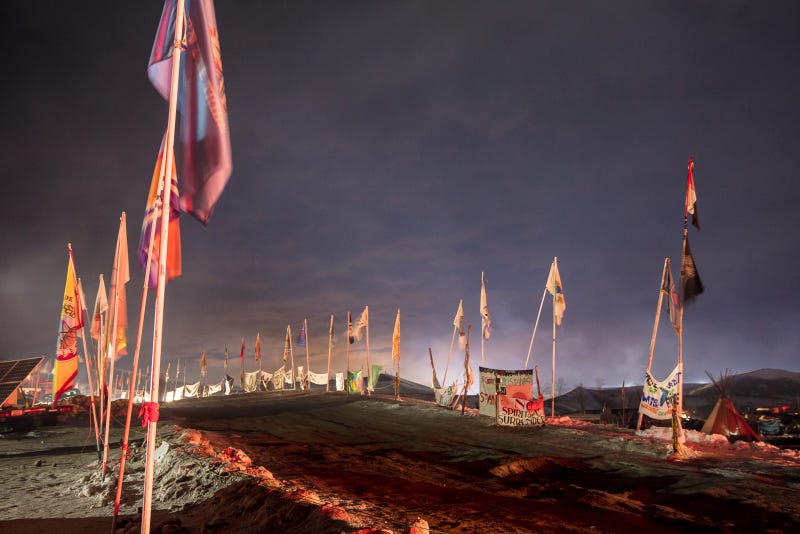
Braun is a member of the Cheyenne River Sioux tribe and a community organizer with the Indigenous Environmental Network. Cheyenne River’s territory borders that of the Standing Rock Sioux, and Braun came in April to help build the movement against the Dakota Access Pipeline. That movement was a historic, sustained civil rights action that led to real change: On December 4, the Army Corps of Engineers blocked the portion of the project that was near Standing Rock land by denying an easement requested by Energy Transfer Partners, the company behind it. ETP has been ordered by the Army Corps to seek an alternate route.
Women have comprised the majority of the “water protectors” (the term coined by another IEN organizer, Dallas Goldtooth). The International Indigenous Youth Council for Standing Rock was founded by a young woman named Jaslyn Charger. Women led numerous demonstrations at the site, standing toe-to-toe against police from all over the country and private security hired by ETP. At the hands of law enforcement, they endured threats, tear gas, rubber bullets, freezing cold water from pressure hoses, mass arrests, and forced strip searches when being taken into custody on minor charges. Along with male and non-Native allies, they’ve faced what they say is a campaign of legal intimidation, but the most serious charges were levied against Red Fawn Fallis, a 37-year-old Native woman charged with “attempted murder of a police officer.” (The charges were dropped without explanation in late November.) The most serious injury sustained at Standing Rock was by a non-Native woman, Sophia Wilansky, whose family says police threw a grenade at her and nearly severed her arm. (Law enforcement has accused demonstrators of throwing explosives.)
LaDonna Brave Bull Allard, an enrolled member of the Standing Rock Sioux and the former tribal historian, owns the land that Sacred Stone Camp rests on, one of the water protectors’ largest encampments. Allard’s family has been in North Dakota since the 1800s, and she’s been a driving force in the Standing Rock campaign. “I come from a long line of bigmouthed women,” she says. “My grandma, my mom—they always stood up.”
The pipeline was her time to stand up, she adds. “I’m the closest landowner. It’s me who’s first facing the devastation of the pipeline, having to face those people.”
The fight was even more personal than land ownership for Allard. She has 18 grandchildren and gave birth to three sons.
“My one son is buried on top of the hill,” she says evenly. “Nobody’s going to put a pipeline next to my son’s grave.”